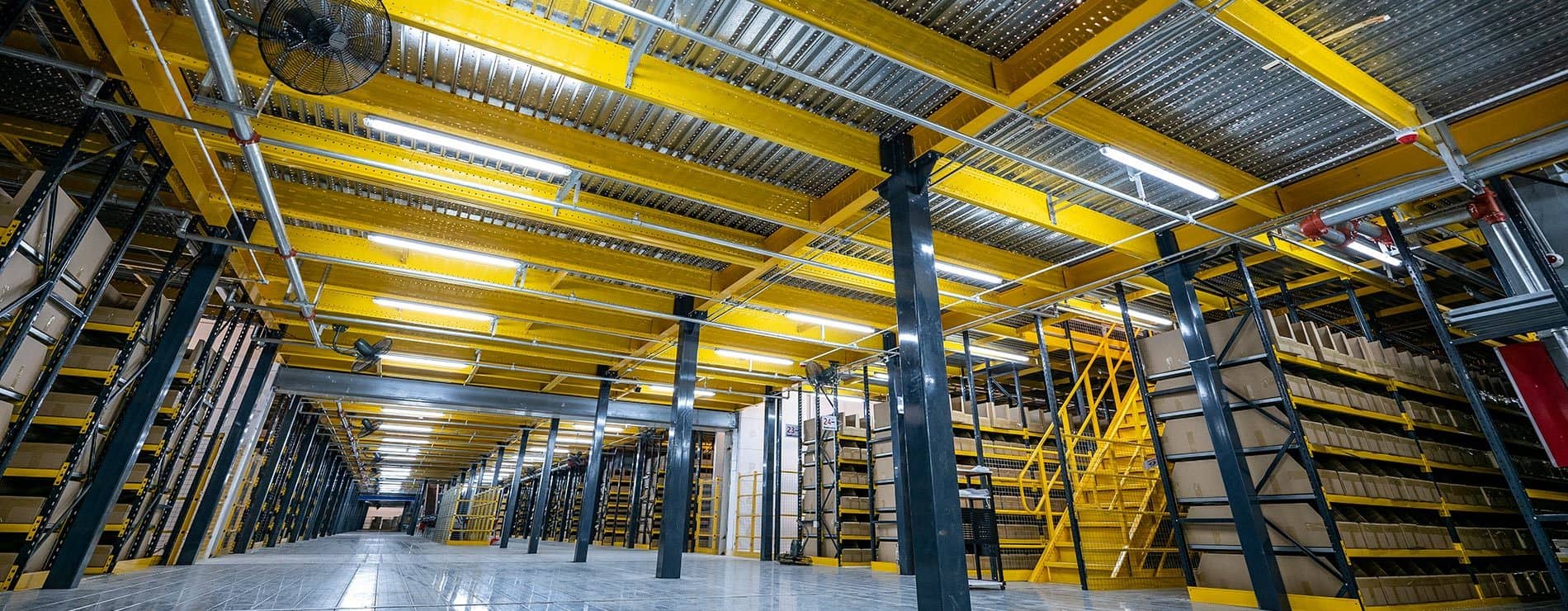
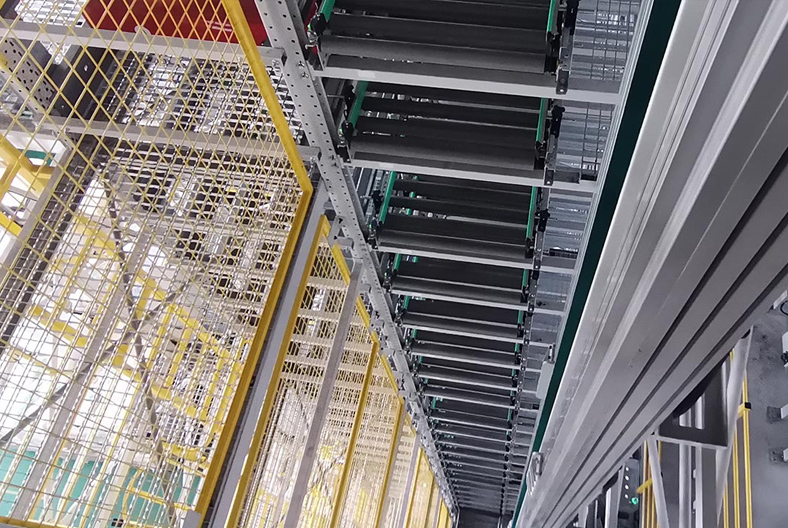
Compact multi-level shuttle system using a shared central lift ("bus") for vertical carrier transport — eliminating per-level elevators and reducing infrastructure cost by up to 40% for mid-height warehouses.
In a conventional multi-level shuttle system, each aisle end requires a dedicated vertical lift — a significant capital and footprint cost. ที่ bus shuttle replaces these individual lifts with a single shared lift car (the "bus") that travels between all storage levels, carrying shuttle carriers up and down as needed. One bus serves 4–6 storage aisles, reducing lift infrastructure cost by 30–40%.
ที่ attic shuttle variant is purpose-designed for mezzanine warehouses — where a raised storage deck is installed above an existing warehouse floor. Shuttle carriers operate on the upper deck, passing totes down through a transfer point to a gravity or belt conveyor serving ground-floor pick stations. No major structural work to the ground floor; ideal for 3PLs adding automated storage to existing buildings.
Both configurations are served by the same WCS, with the bus lift managed as a shared resource. Throughput scales by adding carriers, not lifts.
WCS receives a store or retrieve order, identifies the target level and aisle, then schedules the bus lift and a shuttle carrier to execute the task.
ที่ idle shuttle carrier drives onto the bus lift car at its current level. ที่ bus then travels vertically to the target storage level and the carrier exits onto that level's rail.
Carrier travels along the assigned row, deposits or retrieves the tote, then returns to the bus pick-up point at the aisle end of that level.
Carrier re-boards the bus and is lowered to the I/O conveyor level, where the tote is transferred to outfeed conveyor for the pick station.
One bus serves 4–6 aisles vs one dedicated lift per 1–2 aisles in a full elevator ASRS. Significantly lower capital for mid-height, medium-throughput operations.
Bus and attic configurations are designed around existing building constraints — low eave height, mezzanine floors, split-level DCs. Less structural modification than a full high-bay ASRS.
Add carriers (not lifts) to increase throughput as demand grows. System bus scheduling automatically optimises carrier transport vs lift capacity — a software solution, not a hardware problem.
Attic shuttle integrates the upper mezzanine deck into an automated storage zone, eliminating manual picking on elevated platforms and improving safety for workers at height.
Bus scheduling, carrier assignment, and I/O conveyor sequencing all managed by the WCS. Integrates with host WMS via TCP/IP or REST API for seamless order-driven operation.
Ground-level I/O conveyor delivers totes directly to goods-to-person pick stations. Workers never access the storage levels — all picking done at ergonomic, ground-floor workstations.
| System type | Bus shuttle (shared lift) / Attic shuttle (mezzanine) |
| Storage levels | 2–12 levels |
| Warehouse height (bus) | 6–18m |
| Mezzanine deck height (attic) | 4–8m |
| Bus lift speed | 1.0–1.5 m/s |
| Shuttle speed | 2.0–3.0 m/s |
| Bus-to-aisle ratio | 1 bus per 4–6 aisles |
| Max system throughput | 100–500 totes/hr |
| Load type | Tote 600×400mm standard |
| Max load per tote | 50 kg |
| Pick station interface | Ground-level I/O conveyor |
| Temperature range | 0°C to +40°C standard |
| WMS integration | TCP/IP, REST API |
| Lift infra cost vs elevator ASRS | 30–40% reduction |
Tell us your building height, number of levels, tote count, and throughput requirement — we respond within 24 hours.