4-Way Tote Shuttle
AS/RS System

The highest-throughput compact-load storage system available. Autonomous shuttle carriers navigate both X and Y axes, serving every tote location in a multi-level racking structure — with no dedicated aisle required.

500
Cycles/hr per carrier
30m
Max racking height
-25°C
Cold chain rated
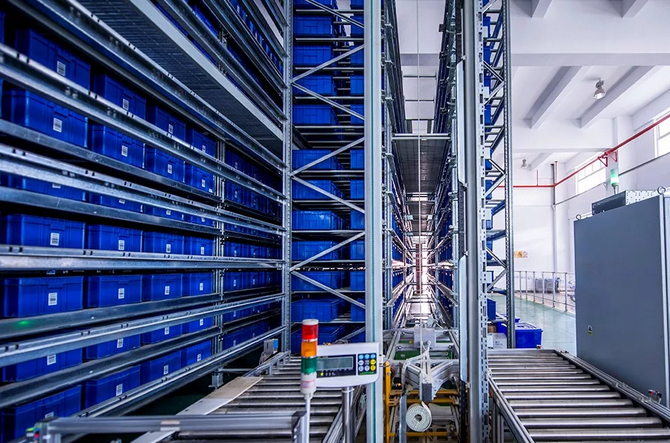
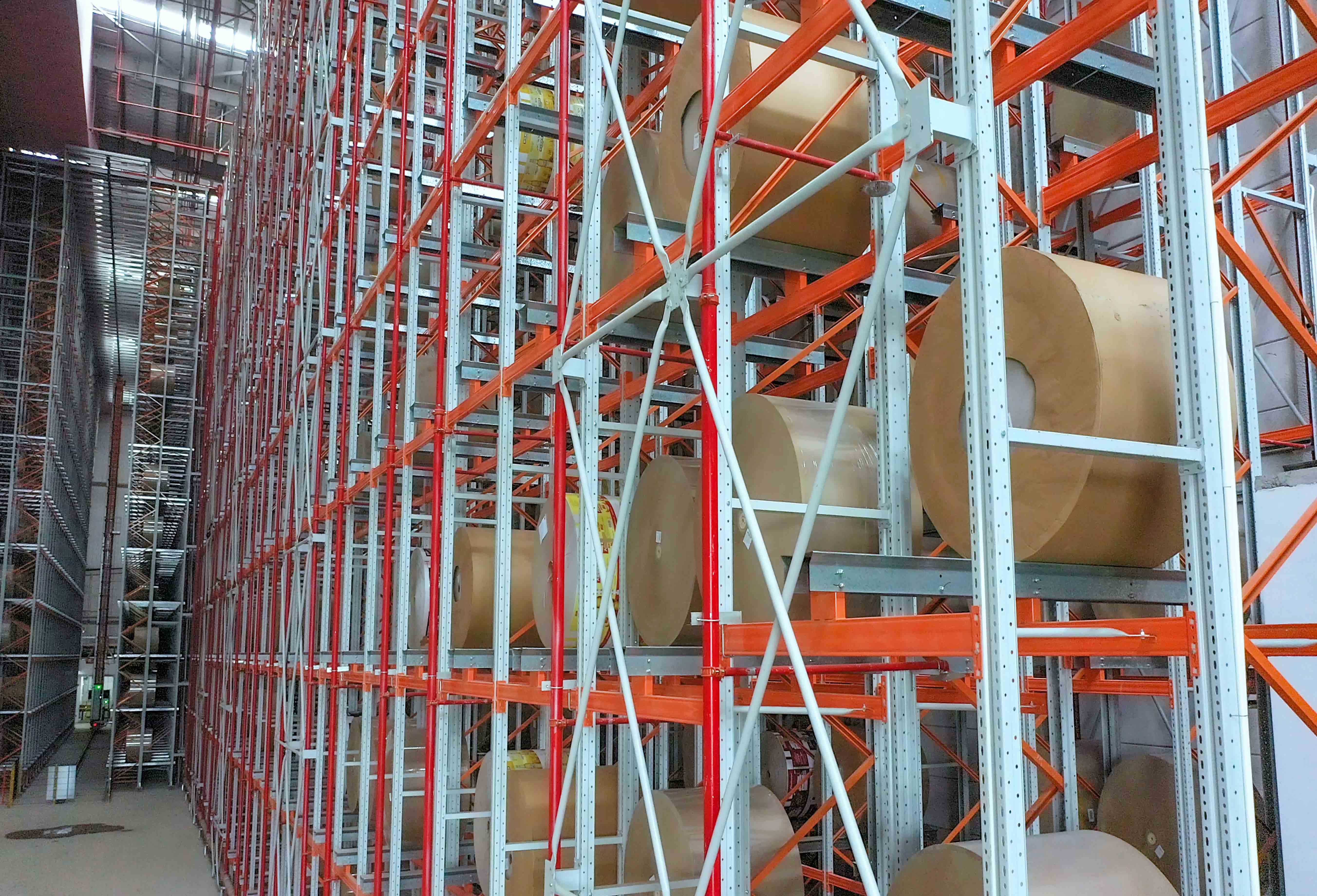
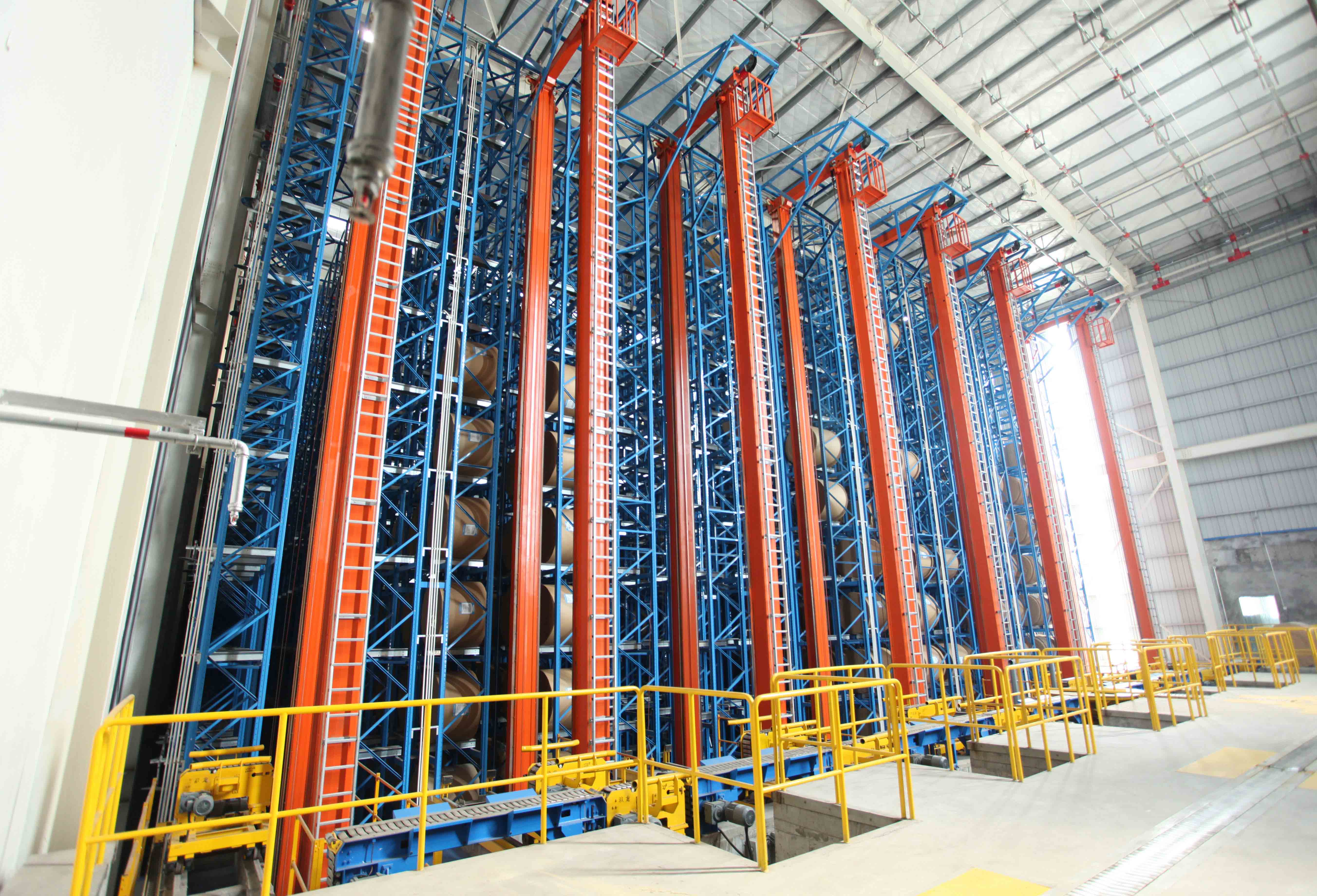
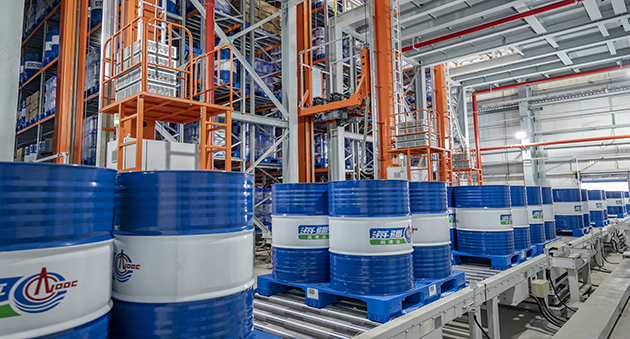
4-Way Tote Shuttle ASRS system — automated multi-level tote storage racking

Dual-Axis Autonomous Shuttle Carrier

The 4-way tote shuttle uses autonomous carrier vehicles that travel along both the X-axis (along each storage row) and the Y-axis (across aisles), controlled by onboard LiDAR and encoder positioning to ±2mm accuracy. Unlike a 2-way system confined to one row, the 4-way carrier can serve any storage location on its level — enabling true random-access retrieval across thousands of positions.

Multiple carriers operate simultaneously per level, coordinated by a Warehouse Control System (WCS) that assigns tasks, manages traffic, and schedules lift access. Vertical lifts (one per aisle end) move carriers between levels. I/O conveyors at the racking perimeter connect to goods-to-person pick stations, sortation, or packing lines.

Systems typically run 4–12 carriers per level with total fleet sizes of 20–200+, scaling throughput linearly. Cold-rated versions operate down to -25°C with heated battery compartments and low-temperature lubricants.

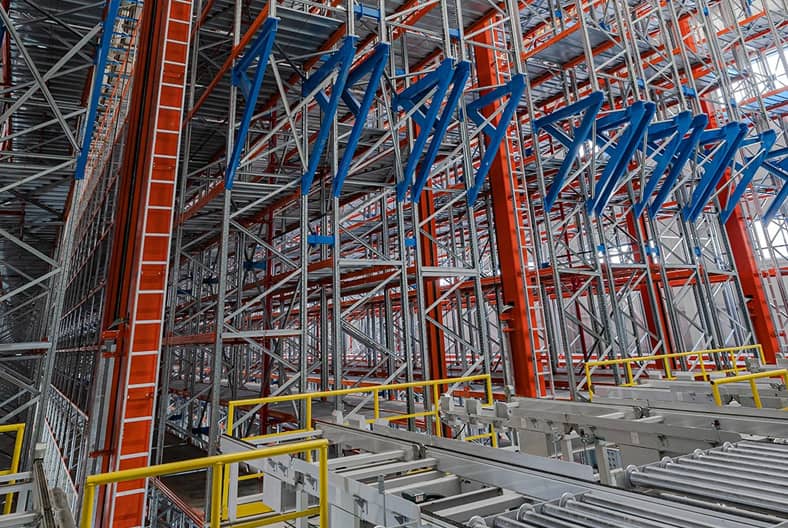
Automated warehouse shelving — tote ASRS storage racks
20+
Storage levels supported
±2mm
Positioning accuracy
5,000+
Totes/hr (multi-carrier)
24h
Quote response time

How the 4-Way Tote Shuttle Works

1

Infeed & Task Assignment

A tote arrives at the I/O conveyor. The barcode scanner reads the tote ID and the WCS assigns a storage location and dispatches the nearest idle carrier.

2

X-Axis Row Travel

The carrier enters the assigned storage row, traveling along the row rail to the target column position. Onboard laser distance sensor confirms position to ±2mm.

3

Y-Axis Cross Travel & Lift

The carrier rotates 90° onto the cross-aisle rail, travels to the vertical lift, and rides the lift to the correct level — or crosses directly to another row on the same level.

4

Storage & Retrieval

The carrier extends its lifting forks to raise and deposit the tote. On retrieval orders, the process reverses — delivering the tote to the outfeed I/O conveyor and pick station.

Why Choose the 4-Way Tote Shuttle

🎯

True Random Access

Any carrier can reach any storage location on its level — no dedicated aisles, no fixed lane assignment. Enables SKU-optimised slotting that automatically adapts to demand patterns.

📈

Linear Throughput Scaling

Add more carriers to increase throughput without changing the racking. Start with 4 carriers per level, scale to 12+ as your order volume grows — hardware investment follows demand.

❄️

Full Cold Chain Rating

Cold-rated carriers with heated Li-ion battery compartments, NSF H1 food-grade lubricants, and galvanised racking profiles operate reliably at -18°C to -25°C without carrier downtime.

🔋

Auto Battery Management

Carriers self-charge at rail-end charging contacts during idle periods. WCS monitors state-of-charge and routes carriers for charging without interrupting system throughput.

🔌

Open WMS Integration

WCS integrates via TCP/IP socket, REST API, or OPC-UA. Compatible with SAP EWM, Oracle WMS, Infor, and custom WMS systems. FEFO and lot-tracking logic built in for pharma and food.

🏗️

Up to 30m Racking Height

Multi-level systems stack up to 30m, maximising vertical storage density in existing buildings. High-speed vertical lifts at 1.5–2.0 m/s minimise inter-level transit time.

Full Technical Specifications

Shuttle Carrier
Load typeTote / bin / tray
Standard tote size600×400mm; 400×300mm available
Max load per tote30–50 kg
Travel speed — X axis3.0 m/s (unladen), 2.5 m/s (laden)
Travel speed — Y axis2.5 m/s (unladen)
Positioning accuracy±2 mm
Lifting mechanismScissor fork / belt lift
BatteryLi-ion, auto-charge at rail contact
Battery life (cold)Heated compartment, -30°C rated cells
Carrier dimensions (WxHxD)Customised to tote size
System Configuration
Throughput per carrier300–500 cycles/hr
Max system throughput1,000–5,000+ totes/hr
Carriers per level4–12 (scalable)
Max racking heightUp to 30m
Storage levels4–20 levels typical
Vertical lift speed1.5–2.0 m/s
Temperature range-25°C to +40°C
Racking materialSteel; galvanised for cold chain
WMS integrationTCP/IP, REST API, OPC-UA
Storage capacity500–100,000+ tote positions

Where 4-Way Tote Shuttles Are Deployed

E-commerce warehouse fulfillment

🛒 E-Commerce Fulfillment

Goods-to-person picking at 300–600 picks/hr per station. Fleet scales instantly for peak season without hiring. High-SKU random storage with WMS-driven dynamic slotting.

Pharmaceutical warehouse automation

💊 Pharma & Healthcare

Lot tracking, expiry management, and FEFO retrieval. GMP-compatible configurations with full audit trail. Both ambient and cold-rated (-25°C) for temperature-sensitive products.

Food distribution warehouse

🍱 Food & Grocery DC

Chilled and frozen food tote storage with FEFO retrieval for supermarket replenishment. NSF H1 food-safe lubricants throughout. -25°C deep-freeze configurations available.

3PL contract logistics warehouse

📦 3PL & Contract Logistics

Multi-client tote storage with WMS-driven client partitioning. High throughput enables winning multi-client fulfillment contracts. Carrier fleet sized to combined client SLAs.

4-Way Tote Shuttle — Questions Answered

What is the difference between a 4-way and 2-way tote shuttle?+
A 2-way shuttle travels along a single assigned row (X-axis only) — it can only store/retrieve in that one row and must be moved to another row by a separate transfer vehicle. A 4-way shuttle travels both along the row (X) and across aisles (Y), so one carrier can serve any position across the entire racking level. The 4-way system achieves significantly higher throughput and true random-access retrieval, at a higher system cost. For high-SKU, high-throughput operations, 4-way is the standard choice.
How many carriers do I need for my throughput requirement?+
A rough estimate: if you need 1,000 tote moves/hr and each carrier achieves 400 cycles/hr, you need approximately 3–4 carriers (allowing for travel time variation). In practice, 4–6 carriers per level is common for medium-throughput systems. Peak throughput is also affected by vertical lift capacity and I/O conveyor speed. Econocontrol can assist with a basic throughput estimate during the RFQ process; detailed simulation is recommended for final sizing.
Can the system operate at -25°C for frozen food storage?+
Yes. Cold-rated 4-way tote shuttle systems are fully engineered for -18°C to -25°C environments. The carrier battery uses low-temperature Li-ion cells rated to -30°C, with a thermostatically heated compartment to maintain cell temperature. All moving parts use NSF H1 food-grade cold lubricants. Racking is hot-dip galvanised to resist condensation corrosion. Drive electronics are housed in IP55 enclosures with internal heaters. Econocontrol can supply the complete cold-rated package including drives and sensors.
What WMS/ERP systems can this integrate with?+
The Warehouse Control System (WCS) included with the shuttle system integrates with any WMS via TCP/IP socket (XML or JSON), REST API, or OPC-UA. Common successful integrations include SAP EWM, Oracle WMS, Infor WMS, Mecalux Easy WMS, and custom WMS platforms. Integration architecture should be defined early in the project — our technical team can advise on protocol selection and API design during the engineering phase.

Other Shuttle & AS/RS Products

Get a Quote for Your Tote Shuttle System

Share your warehouse dimensions, tote count, throughput requirement, and temperature range — we'll respond with a budgetary quote within 24 hours.